Hands-On Science Activities for Elementary School Students

Engineering Activities for Kids in Brooklyn
Hands-On Science Activities for Elementary School Students
Elementary school is one of the best times to introduce children to hands-on science.
At this age, children are naturally curious. They want to know how things work, why reactions happen, what makes objects move, how plants grow, why bridges stand, and what happens when they mix, build, test, and explore.
For parents looking for hands-on science activities for elementary school students, the goal is usually simple: find learning experiences that are educational, exciting, age-appropriate, and fun.
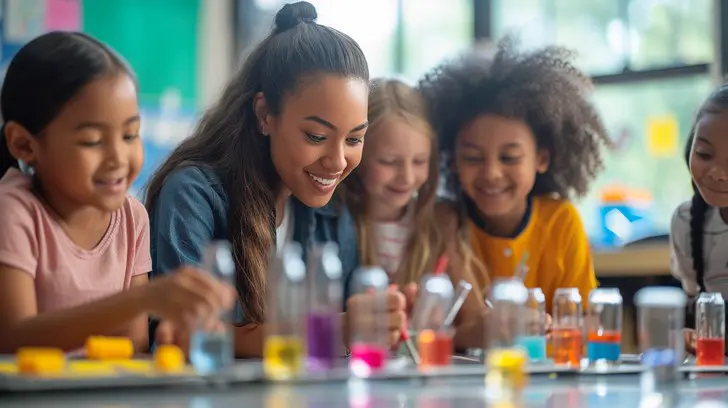
Hands-on science gives children the opportunity to learn by doing. Instead of only reading about science or listening to explanations, students can experiment, build, observe, test, and ask questions.
At Brooklyn Science Spot, children explore science through active, creative, hands-on STEM experiences designed to make learning feel exciting and memorable.
Whether your family lives in Cobble Hill, Carroll Gardens, Park Slope, Boerum Hill, Brooklyn Heights, or another nearby Brooklyn neighborhood, hands-on science activities can help elementary school students build curiosity, confidence, and problem-solving skills.
Why Hands-On Science Matters for Elementary School Students
Children learn best when they are actively involved.
Hands-on science allows elementary school students to see scientific ideas come to life. They are not just hearing about force, motion, chemistry, engineering, or biology. They are experiencing those concepts through activities they can touch, test, and understand.
A child can read about gravity, but launching a paper rocket makes the idea more exciting.
A child can hear about chemical reactions, but watching colors bubble, fizz, and change helps the concept become real.
A child can learn about engineering, but building a bridge and testing its strength makes the lesson easier to remember.
The Smithsonian Science Education Center supports hands-on STEM learning and science education that helps students connect directly with the world around them.
What Makes a Good Hands-On Science Activity?
A strong science activity should do more than keep children busy.
It should encourage students to ask questions, make predictions, test ideas, and think about what happened.
Good hands-on science activities usually include:
-
A clear question or challenge
-
Simple materials
-
Active participation
-
Room for creativity
-
A chance to test and improve
-
A lesson children can understand
The goal is not always to get the “right” answer immediately.
In science, mistakes can be part of the discovery process.
When an experiment does not work the way a child expected, that creates an opportunity to ask why.
1. Build a Paper Bridge
Bridge-building is a great hands-on science activity for elementary school students because it combines engineering, creativity, and problem-solving.
Children can use paper, tape, cardboard, craft sticks, or straws to build a bridge between two surfaces. Then they can test how much weight the bridge can hold.
This activity teaches students about structure, balance, strength, materials, and weight distribution.
After testing the first bridge, children can redesign it and try again.
Questions to ask:
Why did the bridge bend?
What shape made it stronger?
How could we improve the design?
This type of activity introduces students to engineering thinking in a simple and age-appropriate way.
Parents looking for more structured STEM learning can explore Brooklyn Science Spot’s After-School Programs.
2. Create a Sink-or-Float Experiment
A sink-or-float experiment is simple, fun, and perfect for younger elementary students.
Children can collect small objects from around the house or classroom and predict whether each one will sink or float in water.
This activity introduces concepts such as density, buoyancy, weight, and material properties.
Students can test items like:
-
A coin
-
A cork
-
A plastic spoon
-
A rock
-
A toy block
-
A leaf
-
A small ball
Before placing each item in water, ask the child to make a prediction.
Then ask:
Was your prediction correct?
Why do you think that object floated?
Why did this one sink?
This encourages children to observe carefully and think like young scientists.
3. Make a Balloon-Powered Car
A balloon-powered car is an exciting activity that teaches children about force, motion, energy, and engineering.
Students can build a small vehicle using simple materials such as cardboard, straws, bottle caps, skewers, tape, and a balloon.
When the balloon releases air, the force pushes the car forward.
Children can experiment with different designs to see which car travels the farthest.
They can change:
-
Wheel size
-
Car weight
-
Balloon placement
-
Axle alignment
-
Body shape
This activity helps students understand that small design changes can affect performance.
It also encourages persistence because the first version may not work perfectly.
4. Grow Seeds and Track Plant Changes
Plant-growing activities are excellent for elementary science learning.
Children can plant seeds in small cups, place them near sunlight, water them regularly, and observe how they change over time.
This activity introduces students to life science concepts such as germination, plant needs, roots, stems, leaves, sunlight, and water.
Students can keep a simple science journal and record:
-
When the seed was planted
-
When it sprouted
-
How tall it grew
-
How many leaves appeared
-
What changed each week
This helps children practice observation, measurement, patience, and scientific recording.
5. Create a Simple Volcano Reaction
The classic baking soda and vinegar volcano remains popular because it is visual, exciting, and easy for children to understand.
This activity introduces students to chemical reactions.
Children can build a small volcano using a cup, clay, paper, or cardboard. Then they can add baking soda and vinegar to create a bubbling reaction.
To make the activity more educational, ask:
What happened when the ingredients mixed?
Did the reaction happen quickly or slowly?
What do you think caused the bubbles?
How could we make the eruption bigger or smaller?
This turns a fun experiment into a meaningful science conversation.
6. Build a Marble Run
A marble run allows elementary students to explore gravity, motion, speed, angles, and engineering.
Children can use cardboard tubes, paper towel rolls, tape, blocks, ramps, and boxes to create a path for a marble.
The goal is to move the marble from the starting point to the finish line.
Students can test different slopes and track designs.
Questions to ask:
What made the marble go faster?
Where did it get stuck?
How can we change the path?
What happens if the ramp is steeper?
This activity encourages planning, testing, and problem-solving.
7. Explore Magnets
Magnet activities are simple, safe, and fascinating for elementary school students.
Children can test which objects are attracted to magnets and which are not.
They can explore paper clips, coins, foil, keys, plastic toys, fabric, wood, and other materials.
This activity introduces ideas such as magnetic force, attraction, repulsion, and material properties.
Students can also experiment with pushing and pulling magnets together.
Ask questions such as:
Which objects were magnetic?
Which were not?
What happened when two magnets pushed away from each other?
Can a magnet work through paper or cardboard?
This helps children learn through observation and experimentation.
8. Design an Egg Drop Challenge
The egg drop challenge is a hands-on engineering activity that encourages children to design, build, test, and improve.
Students must create a protective container that keeps an egg from breaking when dropped from a safe height.
They can use materials such as paper, cardboard, cotton balls, tape, straws, bubble wrap, or plastic bags.
This activity teaches students about impact, cushioning, force, design, and problem-solving.
After the test, children can evaluate what happened.
Did the egg survive?
What protected it?
What could be improved?
This is a great example of how science activities teach children that failure can lead to better ideas.
9. Make Shadow Experiments
Shadow experiments help children explore light, shape, distance, and position.
Students can use a flashlight and different objects to create shadows on a wall or paper.
They can move the object closer to or farther from the light and observe how the shadow changes.
This activity teaches children that light travels in a path and that shadows form when something blocks light.
Questions to ask:
What happened when the object moved closer to the flashlight?
Did the shadow get bigger or smaller?
Which objects made clear shadows?
Can you change the shape of the shadow?
This is a simple but powerful activity for understanding light.
10. Create a Chain Reaction Machine
A chain reaction machine is a fun engineering and physics activity.
Children design a sequence where one action causes another action to happen.
For example:
A ball rolls down a ramp.
The ball knocks over blocks.
The blocks hit a toy car.
The toy car bumps another object.
This type of activity teaches cause and effect, motion, energy transfer, planning, and sequencing.
It also encourages patience because every part of the system has to work together.
Hands-On Science Helps Build Confidence
One of the biggest benefits of hands-on science activities is that children gain confidence.
They learn that they can ask questions.
They can test ideas.
They can solve problems.
They can improve their work.
This is especially important for elementary school students because they are still developing their learning identity.
When children see themselves as capable problem-solvers, they become more willing to try new challenges.
Hands-on science also helps children understand that learning does not only happen from books. Learning can happen through building, experimenting, observing, and discovering.
Science Activities Support School Learning
Hands-on science activities can support what elementary students learn in school.
Many classroom science topics become easier to understand when children experience them directly.
Force and motion make more sense when students build a balloon car.
Plant life cycles become more memorable when students grow seeds.
Engineering becomes clearer when children build bridges or towers.
Chemical reactions become exciting when students observe bubbling, fizzing, and change.
The National Science Teaching Association provides elementary science resources that support strong science learning for young students.
Hands-On Science Activities in Brooklyn
For families in Brooklyn, hands-on science activities can be a great way to keep children learning beyond the school day.
Parents in Cobble Hill, Carroll Gardens, Park Slope, Boerum Hill, Brooklyn Heights, and nearby neighborhoods often look for activities that are both fun and educational.
Brooklyn Science Spot gives children opportunities to explore STEM through hands-on experiments, building challenges, creative projects, and science-based play.
Families looking for ongoing enrichment can learn more about our After-School Programs.
During school breaks, children can continue exploring science through our Holiday Camps.
In the summer, families can explore our Summer Programs.
Brooklyn Science Spot also offers educational experiences for schools through our STEM School Trips.
How Parents Can Encourage Science at Home
Parents do not need expensive supplies to encourage hands-on science.
Many great activities use everyday materials such as paper, cups, water, cardboard, tape, straws, balloons, blocks, flashlights, magnets, and recycled materials.
The most important thing parents can do is ask good questions.
Try asking:
What do you think will happen?
Why do you think that happened?
What could we change?
How can we test it?
What did you notice?
What would you try next?
These questions help children develop curiosity, critical thinking, and confidence.
Families can also explore additional STEM learning resources through NASA STEM Engagement, which provides science, technology, engineering, and space-related educational resources for students and families.
Finding the Right Hands-On Science Activities for Elementary School Students
The best hands-on science activities are engaging, age-appropriate, and meaningful.
They allow children to explore real ideas through experiments, building challenges, observation, and creative problem-solving.
For elementary school students, hands-on science can make learning feel exciting rather than overwhelming.
It helps children understand the world around them while building important skills such as creativity, persistence, communication, collaboration, and critical thinking.
For families searching for hands-on science activities for elementary school students in Brooklyn, Brooklyn Science Spot offers programs designed to help children learn by doing.
Located near Cobble Hill and Carroll Gardens, Brooklyn Science Spot provides hands-on STEM experiences that encourage children to build, experiment, discover, and have fun.
Explore our After-School Programs, learn about our Summer Programs, or visit Brooklyn Science Spot to find the right STEM learning experience for your child.
Frequently Asked Questions About Indoor Activities for Kids in Brooklyn
What are hands-on science activities?
Hands-on science activities are learning experiences where children actively experiment, build, test, observe, and explore scientific ideas instead of only reading or listening.
Why are hands-on science activities good for elementary school students?
They help children understand science concepts through direct experience while building problem-solving, curiosity, creativity, and confidence.
What are easy science activities for elementary students?
Easy activities include sink-or-float experiments, seed growing, magnet testing, paper bridges, balloon cars, shadow experiments, marble runs, and simple volcano reactions.
Can hands-on science activities help my child in school?
Yes. Hands-on activities can reinforce school science lessons by making concepts easier to see, touch, test, and understand.
Are there hands-on science activities for kids in Brooklyn?
Yes. Brooklyn Science Spot offers hands-on STEM programs for children in Brooklyn, including families near Cobble Hill, Carroll Gardens, and surrounding neighborhoods.
Do children need science experience to participate?
No. Hands-on science activities are designed to be accessible, fun, and educational for children with different levels of experience.