Why STEM Education Is Important for Children

Engineering Activities for Kids in Brooklyn
Why STEM Education Is Important for Children
Children are growing up in a world shaped by science, technology, engineering, and mathematics.
From smartphones and medical discoveries to transportation systems, renewable energy, robotics, artificial intelligence, and space exploration, STEM subjects influence nearly every part of modern life.
However, STEM education is about much more than preparing children to become scientists, engineers, programmers, or mathematicians.
STEM education helps children learn how to ask questions, solve problems, think creatively, work with others, test ideas, learn from mistakes, and understand the world around them.
For parents wondering why STEM education is important for children, the answer can be found in the skills children develop when they are encouraged to explore, experiment, build, create, and discover.
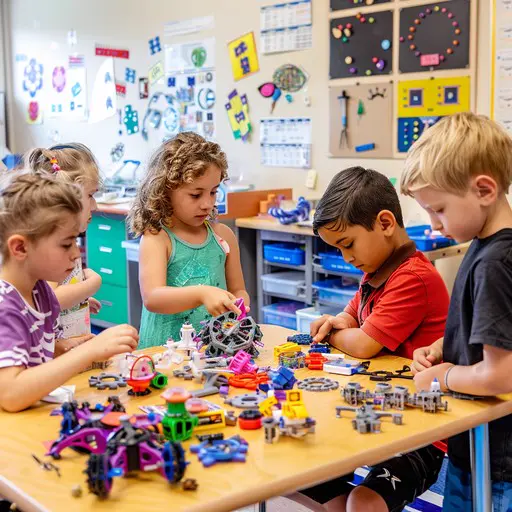
At Brooklyn Science Spot, children experience science and STEM through hands-on learning opportunities designed to make education exciting, engaging, and meaningful.
For families in Cobble Hill, Carroll Gardens, Park Slope, Boerum Hill, Brooklyn Heights, and surrounding Brooklyn neighborhoods, STEM programs can provide children with valuable opportunities to continue learning beyond the traditional classroom.
What Is STEM Education?
STEM stands for science, technology, engineering, and mathematics.
While these subjects are sometimes taught separately in school, STEM education encourages children to understand how they work together.
For example, imagine children are challenged to build a bridge.
They may use science to understand forces and materials.
They use mathematics to measure distances and compare results.
They use engineering to design, build, test, and improve the structure.
They may use technology to research ideas, collect data, or document their results.
STEM education brings different areas of learning together through problem-solving and exploration.
The goal is not simply to memorize facts.
The goal is to help children learn how to use knowledge to investigate questions and solve problems.
Why Is STEM Education Important for Children?
Children are naturally curious.
They ask questions.
Why does that happen?
How does this work?
What happens if I change something?
Can I build it differently?
STEM education encourages children to investigate these questions.
Instead of immediately giving children answers, hands-on STEM learning gives them opportunities to develop ideas, test solutions, observe results, and make improvements.
These experiences can help children develop skills they will use throughout school, future careers, and everyday life.
STEM Education Develops Problem-Solving Skills
One of the greatest benefits of STEM education is the development of problem-solving skills.
STEM activities frequently begin with a challenge.
How can we build a tower that will not fall?
How can we make a vehicle travel farther?
How can we protect an egg from breaking?
How can we create a bridge that supports more weight?
Children must examine the problem and develop possible solutions.
They build.
They test.
They observe.
They make changes.
Then they try again.
This process teaches children that complicated problems can often be solved by breaking them into smaller challenges and testing different approaches.
Problem-solving skills are valuable far beyond science and mathematics.
Children use these skills in school, relationships, decision-making, creative projects, and everyday situations.
STEM Encourages Children to Think Critically
Critical thinking is the ability to analyze information, ask questions, evaluate evidence, and make informed decisions.
STEM activities naturally encourage children to practice these skills.
During an experiment, children might ask:
What happened?
Why did it happen?
Was our prediction correct?
What evidence supports our conclusion?
What should we change next time?
Instead of accepting information without question, children learn to investigate ideas.
They begin to understand that conclusions should be supported by observations and evidence.
This approach to learning can help children become more independent thinkers.
STEM Education Encourages Creativity
STEM and creativity are closely connected.
Engineering challenges often have many possible solutions.
A group of children asked to build a bridge may create completely different designs.
One child might use triangles for strength.
Another might build multiple support columns.
Another may experiment with different materials.
Children must imagine possibilities before they can build solutions.
STEM activities encourage children to combine creativity with practical problem-solving.
This helps children understand that science and engineering are not simply about following instructions.
They are also about inventing, designing, experimenting, and discovering new possibilities.
Parents interested in giving children opportunities to explore engineering can learn more in our article about Engineering Activities for Kids in Brooklyn.
STEM Helps Children Learn From Mistakes
Children sometimes become frustrated when they make mistakes.
STEM education can help change the way children think about failure.
Experiments do not always work.
Structures collapse.
Vehicles do not move.
Predictions are incorrect.
Programs contain errors.
Engineering designs need improvement.
These experiences teach children that failure can provide useful information.
When something does not work, children can ask why.
They can examine the results.
They can change their approach.
Then they can try again.
This process can help children develop persistence and confidence when facing difficult challenges.
STEM Education Builds Confidence
Children become more confident when they discover that they can solve problems independently.
Completing an experiment, building a working structure, solving a coding challenge, or improving an engineering design gives children a sense of accomplishment.
They begin to think:
I can figure things out.
I can solve difficult problems.
I can learn from mistakes.
I can improve my ideas.
These experiences can help children become more willing to try new activities and tackle unfamiliar challenges.
STEM Helps Children Understand the World Around Them
Science, technology, engineering, and mathematics are everywhere.
Buildings require engineering.
Weather involves science.
Smartphones use technology.
Cooking involves chemistry and measurement.
Transportation systems depend on engineering, mathematics, and technology.
Plants, animals, ecosystems, and the human body involve biology.
STEM education helps children recognize these connections.
A walk through Brooklyn can become an opportunity to observe bridges, construction projects, subway systems, buildings, parks, machines, weather, plants, and technology.
Children begin to understand that STEM is not simply something they study in school.
STEM is part of everyday life.
STEM Education Supports Learning in School
Hands-on STEM experiences can help reinforce concepts children encounter in the classroom.
A child learning about forces and motion can build a balloon-powered vehicle.
A student studying plants can grow seeds and record observations.
A child learning about structures can design and test a bridge.
A student studying electricity can experiment with circuits.
These activities make abstract concepts easier to understand because children can see the results of their ideas.
Parents looking for additional learning opportunities can explore our Science Classes for Kids in Brooklyn article and our guide to Hands-On Science Activities for Elementary School Students.
STEM Encourages Collaboration and Teamwork
Many STEM challenges involve children working together.
Students may need to share materials, discuss ideas, divide responsibilities, solve disagreements, and combine different solutions.
One child might develop an idea.
Another may identify a problem.
Someone else may suggest an improvement.
Through collaboration, children learn that complicated problems can benefit from different perspectives.
These experiences help children develop teamwork and communication skills that are valuable in school and everyday life.
STEM Helps Develop Communication Skills
STEM education also encourages children to communicate their ideas.
Children may need to explain how an experiment works.
They might describe why a structure failed.
They may present an engineering design.
They might compare results with classmates.
They may need to explain the evidence supporting their conclusions.
Learning how to communicate ideas clearly can help children become more confident speakers, writers, and collaborators.
STEM Education Prepares Children for a Changing World
Technology continues to change how people live, work, communicate, and solve problems.
Children growing up today will encounter technologies and careers that continue to evolve throughout their lives.
STEM education can help children develop adaptable skills.
Problem-solving.
Critical thinking.
Creativity.
Collaboration.
Communication.
Persistence.
Curiosity.
These abilities can be valuable regardless of the careers children eventually choose.
The U.S. Department of Education STEM Education page provides additional information about STEM learning and initiatives designed to support science, technology, engineering, and mathematics education.
Why Hands-On STEM Learning Is So Effective
Children often understand concepts better when they can interact directly with them.
Instead of simply reading about gravity, children can build a marble run.
Instead of memorizing facts about chemical reactions, they can conduct an experiment.
Instead of studying engineering only through diagrams, they can build and test a structure.
Hands-on learning allows children to connect ideas with experiences.
It also gives children opportunities to make decisions.
What materials should we use?
What should we test?
Why did our design fail?
How can we improve it?
Organizations such as the Smithsonian Science Education Center support science and STEM education approaches that encourage students to investigate questions and actively participate in learning.
STEM Education Can Begin at a Young Age
Children do not need to wait until middle school or high school to explore STEM.
Young children can begin developing STEM skills through simple activities.
Building with blocks introduces engineering concepts.
Sorting objects encourages mathematical thinking.
Observing insects introduces biology.
Playing with magnets introduces physical science.
Mixing safe household materials can demonstrate chemical reactions.
Building ramps and rolling objects introduces forces and motion.
The activities become more complex as children grow, but the foundation begins with curiosity.
STEM Learning Beyond the School Day
Children spend a significant amount of time outside the classroom.
After-school programs, weekend activities, camps, museums, family projects, and enrichment classes can provide additional opportunities for children to explore STEM subjects.
These environments can allow children to spend more time experimenting, building, and investigating topics that interest them.
Families looking for ongoing STEM enrichment can explore our After-School Programs.
During school breaks, children can continue learning through our Holiday Camps.
Families looking for summer learning opportunities can explore our Summer Programs.
Brooklyn Science Spot also offers hands-on educational experiences for schools and organizations through our STEM School Trips.
STEM Education for Children in Brooklyn
Brooklyn families have access to many educational opportunities.
However, parents are often searching for programs that combine meaningful learning with experiences their children genuinely enjoy.
Hands-on STEM programs can provide children with opportunities to experiment, create, build, solve problems, and discover new interests.
Brooklyn Science Spot provides STEM learning experiences for children in Cobble Hill, Carroll Gardens, and surrounding Brooklyn neighborhoods.
Our programs are designed to encourage curiosity and help children explore science, technology, engineering, and mathematics through active participation.
How Parents Can Encourage STEM Learning at Home
Parents do not need advanced scientific knowledge or expensive equipment to encourage STEM learning.
Everyday activities can become opportunities for exploration.
Build a tower and test how high it can go.
Cook together and discuss measurements.
Grow plants and record changes.
Build paper airplanes and compare flight distances.
Explore magnets.
Create ramps for toy cars.
Observe weather patterns.
Ask children how everyday machines work.
Parents can also encourage STEM thinking by asking questions.
What do you notice?
What do you think will happen?
Why do you think that happened?
How could we test your idea?
What could we change?
Is there another solution?
Resources from NASA STEM Engagement can provide families and educators with additional science, technology, engineering, mathematics, and space-related learning activities.
Finding STEM Education Opportunities for Your Child
STEM education gives children opportunities to develop skills that can support them throughout school and life.
Children learn how to solve problems.
They develop critical-thinking skills.
They become more comfortable experimenting.
They learn how to work with others.
They discover how to communicate ideas.
They develop creativity and persistence.
Most importantly, STEM education encourages children to remain curious. For younger children, programs focused on STEM preschool in Brooklyn can introduce these concepts early through hands-on exploration, experimentation, and play.
For parents wondering why STEM education is important for children, one of the greatest benefits is that STEM helps children become active learners.
They learn that they can ask questions, investigate ideas, solve problems, and improve their understanding of the world around them.
For families searching for STEM education opportunities in Brooklyn, Brooklyn Science Spot provides hands-on programs designed to make science, technology, engineering, and mathematics engaging and accessible for children.
Explore our After-School Programs, discover our Summer Programs, or visit Brooklyn Science Spot to find STEM learning experiences for your child.
Frequently Asked Questions About Indoor Activities for Kids in Brooklyn
What does STEM stand for?
STEM stands for science, technology, engineering, and mathematics. STEM education often combines these subjects through hands-on activities, experiments, projects, and problem-solving challenges.
Why is STEM education important for elementary school students?
STEM education can help elementary school students develop problem-solving, critical thinking, creativity, collaboration, communication, and persistence while building their understanding of science and mathematics.
What are the benefits of STEM education for children?
Benefits can include stronger problem-solving skills, increased curiosity, greater confidence, creativity, teamwork, communication skills, and opportunities to apply academic concepts through real-world activities.
At what age should children begin STEM education?
Children can begin exploring STEM concepts at a young age through age-appropriate activities such as building, sorting, observing nature, experimenting with materials, and solving simple problems.
How can parents encourage STEM learning at home?
Parents can encourage STEM learning by providing opportunities to build, experiment, observe, measure, create, and solve problems while asking questions that encourage children to explain their thinking.
Are there STEM education programs for children in Brooklyn?
Yes. Brooklyn Science Spot provides hands-on STEM learning experiences for children in Cobble Hill, Carroll Gardens, and surrounding Brooklyn neighborhoods through after-school programs, school-break programs, summer programs, and educational experiences.