7 Outdoor Science Activities for Kids in Brooklyn

7 Outdoor Science Activities for Kids in Brooklyn
Families living in Cobble Hill and Carroll Gardens do not have to travel far to find exciting opportunities for children to explore nature, discover wildlife, and experience science firsthand.
From neighborhood parks and community gardens to tree-lined streets and nearby waterfront spaces, the area surrounding Brooklyn Science Spot provides countless opportunities to turn an ordinary afternoon into a hands-on science adventure.
For parents searching for fun and educational activities for kids in Cobble Hill, Carroll Gardens, and nearby Brooklyn neighborhoods, exploring biodiversity is a simple way to encourage curiosity, observation, problem-solving, and a lifelong interest in science.
Located on Court Street in Carroll Gardens near Cobble Hill, Brooklyn Science Spot gives children even more opportunities to explore science through hands-on experiments, STEM activities, after-school programs, camps, and exciting educational experiences.
Whether your child is searching for insects, identifying trees, observing birds, or investigating urban ecosystems, every outdoor adventure can begin with one simple question:
“What can we discover today?”
1. Explore the Wildlife of Prospect Park
One of the best places for children to discover biodiversity in Brooklyn is Prospect Park.
The park’s forests, meadows, lake, streams, and wetlands provide habitats for hundreds of different plants and animals.
Families can walk along the trails and encourage children to observe birds, insects, squirrels, flowers, trees, and other wildlife.
Turn your visit into a science adventure by asking questions such as:
What animals can you find?
Why do certain insects live near water?
How are the trees different from one another?
What evidence can you find that animals have been nearby?
Children can bring a notebook and create their own Junior Scientist Field Journal, drawing pictures and recording their discoveries.
Families interested in learning more about the park’s natural environments, wildlife, and educational programs can explore the Prospect Park Alliance website.
2. Go on a Brooklyn Biodiversity Scavenger Hunt
A scavenger hunt is one of the easiest outdoor science activities for kids because it encourages children to slow down and carefully observe their surroundings.
Create a simple checklist of things your child might discover.
Look for:
- Three different types of leaves
- A bird building or sitting near a nest
- An insect crawling on the ground
- Something growing on a tree
- Seeds or pinecones
- Animal tracks
- A spiderweb
- Flowers of different colors
- Evidence that an animal has eaten something
Children can take photographs, make drawings, or write observations about each discovery.
The goal is not simply to complete the checklist.
The real learning happens when children begin asking questions about what they find.
Why does this leaf have this shape?
Where does this insect live?
What does this animal eat?
Questions like these encourage children to think like scientists.
3. Become a Tree Detective
Brooklyn streets and parks contain an incredible variety of trees.
Take your child on a neighborhood walk and challenge them to become a Tree Detective.
Observe the bark, leaves, branches, seeds, and overall shape of different trees.
Children can compare their discoveries and look for similarities and differences.
Ask questions such as:
Which tree has the largest leaves?
Which tree has the roughest bark?
Can you find seeds underneath the tree?
Do you see insects living on the tree?
Why might birds choose certain trees for nests?
Families can also use the New York City Parks Tree Map to discover and learn about trees throughout the five boroughs.
This simple activity introduces children to biology, ecology, classification, and environmental science while encouraging them to pay closer attention to their neighborhood.
4. Search for Birds Living in Brooklyn
Birdwatching is another easy way to introduce children to biodiversity.
Brooklyn is home to many different bird species, and additional migratory birds pass through the borough throughout the year.
Visit a neighborhood park or simply observe birds from your backyard, balcony, or window.
Encourage your child to notice:
The bird’s size.
The shape of its beak.
The colors of its feathers.
The sounds it makes.
What it is eating.
Where it builds its nest.
Children can create drawings of the birds they discover and research their names when they return home.
Families who want to learn more about birds and participate in community science projects can explore resources from the Cornell Lab of Ornithology.
5. Discover the Tiny World of Insects
Some of the most interesting wildlife in Brooklyn can be found right beneath our feet.
Children can search for ants, butterflies, beetles, worms, bees, spiders, and other small creatures living in parks, gardens, and neighborhood green spaces.
Bring a magnifying glass and encourage your child to observe insects without disturbing them.
Ask questions such as:
How many legs does the insect have?
How does it move?
Where does it live?
What might it eat?
How does its body help it survive?
These observations introduce children to important scientific concepts such as habitats, adaptation, food chains, and ecosystems.
They also teach children that even the smallest creatures play an important role in the natural world.
6. Explore Community Gardens in Brooklyn
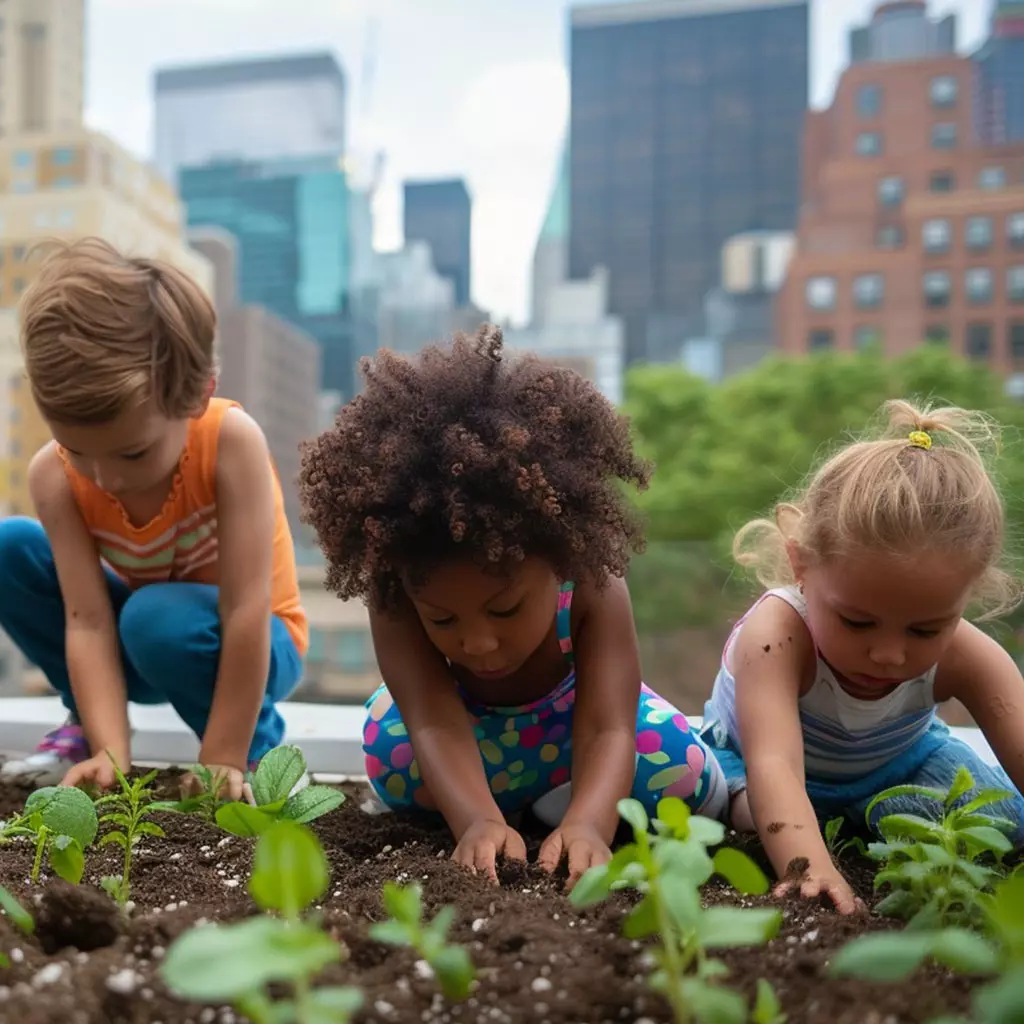
Community gardens provide another opportunity for children to discover science and biodiversity.
Plants, insects, birds, soil, sunlight, and water all interact to create small urban ecosystems.
Visit a community garden and encourage your child to observe the different plants and animals they discover.
Children can investigate questions such as:
Why do some plants grow better in sunlight?
How do bees help flowers?
Why are worms important for soil?
Where do vegetables come from?
How does water travel through a plant?
These experiences help children understand where food comes from while introducing concepts related to biology, environmental science, and sustainability.
Families can explore community gardens and environmental programs throughout New York City through GreenThumb, the country’s largest community gardening program.
7. Bring Your Nature Discoveries Home
The science adventure does not have to end when your family leaves the park.
Encourage children to bring their observations and discoveries home.
Children can create:
Nature journals.
Leaf rubbings.
Drawings of animals and insects.
Models of ecosystems.
Collections of photographs.
Charts comparing different plants.
Stories inspired by their outdoor adventures.
Parents can also encourage children to continue asking questions and conducting simple experiments.
For example:
Which leaves float in water?
How do different seeds travel?
What happens when plants receive different amounts of sunlight?
How quickly does water evaporate outside?
Turning observations into experiments helps children understand that science is not simply something they learn in school.
Science is a way of exploring and understanding the world.
Why Exploring Biodiversity Is Important for Children
Children are naturally curious about the world around them.
Exploring biodiversity encourages them to observe carefully, ask questions, identify patterns, and think critically about how living things interact.
These experiences can help children develop important STEM skills while building a greater appreciation for nature and the environment.
Most importantly, hands-on science activities allow children to actively participate in the learning process.
Instead of simply reading about ecosystems, animals, or plants, children can observe them, investigate them, and ask questions about what they discover.
Turn Your Child's Curiosity Into Hands-On STEM Learning
Outdoor science adventures are a great way to introduce children to biology, ecology, and environmental science.
But the exploration does not have to stop when you leave the park.
At Brooklyn Science Spot, children explore science, technology, engineering, and math through exciting experiments, engineering challenges, creative projects, and hands-on activities designed to make learning fun.
Our STEM programs give children opportunities to experiment, build, create, investigate, and solve problems while developing confidence and curiosity.
Families searching for after-school programs in Brooklyn can explore our hands-on STEM classes and enrichment programs.
Looking for exciting activities when school is out?
Explore our summer science programs for kids in Brooklyn.
Planning your child’s next celebration?
Discover our science birthday parties for kids in Brooklyn, where children can celebrate with exciting experiments and hands-on STEM activities.
Discover Hands-On Science at Brooklyn Science Spot
Brooklyn is filled with opportunities for children to explore, experiment, and discover.
A walk through Prospect Park, a visit to a community garden, or a simple neighborhood scavenger hunt can introduce children to ecosystems, wildlife, plants, insects, and the incredible biodiversity that exists throughout our city.
At Brooklyn Science Spot, we help children take that natural curiosity even further.
Through hands-on experiments, engineering challenges, science activities, and creative STEM experiences, children are encouraged to ask questions, test ideas, solve problems, and discover how exciting science can be.
Explore our STEM programs and discover why Brooklyn Science Spot is becoming a destination for families looking for fun, educational, and hands-on STEM experiences for kids.
Ready to start exploring? Visit Brooklyn Science Spot and discover your child’s next science adventure.