What is Steam?
Why STEAM Is Part of Our Mission
STEAM is an essential part of our mission because it invites children to wonder, question, explore, create, and discover. Through science, technology, engineering, arts, and mathematics, children build the habits of mind that support critical thinking, creativity, collaboration, communication, and confident problem-solving.
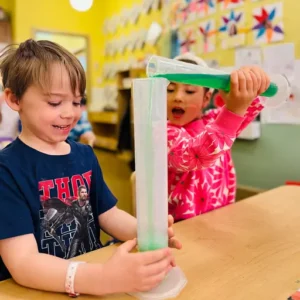
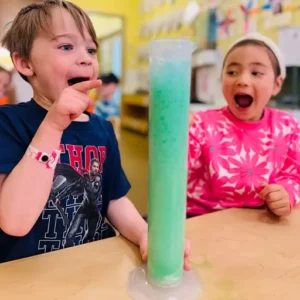
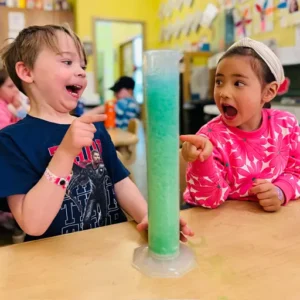
We believe children learn best by doing. That is why our curriculum is built around hands-on investigations, meaningful projects, creative exploration, and inquiry-based experiences that help children engage deeply with ideas instead of simply memorizing facts.
What STEAM Means
Science teaches children to observe, ask questions, experiment, and make sense of the natural world.
Technology helps children use tools, materials, and age-appropriate resources to explore and solve problems.
Engineering encourages children to design, build, test, improve, and understand that solutions can evolve through trial and revision.
Arts bring imagination, creativity, communication, and design thinking into the learning process, strengthening innovation across every subject.
Mathematics helps children measure, compare, recognize patterns, analyze information, and think logically.
Our Curriculum
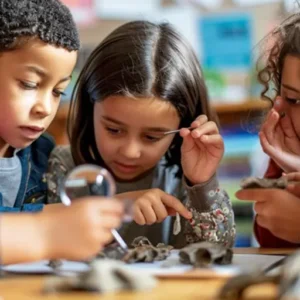
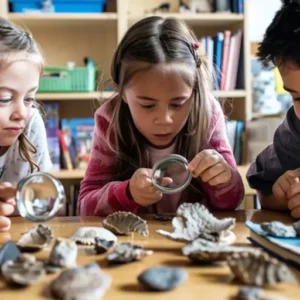
Our curriculum is rooted in inquiry, discovery, and hands-on learning. Children investigate scientific concepts, explore materials, test ideas, build models, solve problems, and express their understanding through both experimentation and creative work.
We focus on both big ideas and everyday thinking skills. Children engage with concepts such as cause and effect, motion, structure, patterns, measurement, design, observation, and evidence while building the confidence to ask questions and seek answers on their own.
Process Skills That Matter
An important part of our mission is teaching children how to think like scientists. We develop process skills such as observing, predicting, questioning, testing, comparing, recording, explaining, collaborating, and revising.
These skills matter because they help children move beyond simply knowing information to actually using it. Science education research describes process skills as foundational to inquiry and to the way scientists investigate, reason from evidence, and draw conclusions.
Making Future Scientists
Our goal is not only to teach science lessons, but to help children begin to see themselves as scientists, inventors, engineers, and creative thinkers. Early STEAM experiences help children develop curiosity, persistence, adaptability, and the confidence to explore new ideas and solve real problems.
When children are encouraged to ask why, test how, and imagine what is possible, they begin building the mindset of future scientists. That identity starts early and grows through joyful, meaningful experiences of discovery and experimentation.
Origin of the Curriculum
This curriculum was originated by Carmelo the Science Fellow, whose vision has shaped this work from the beginning. His approach combines inquiry, creativity, humor, hands-on discovery, and rich scientific thinking to make STEAM learning exciting, memorable, and deeply meaningful for children.
“Inspired By "Carmelo the Science Fellow"
Where Brooklyn’s Future Scientists Come to Play
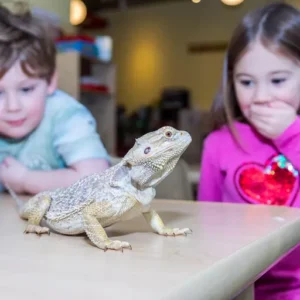
Hands-on STEM adventures, live animal encounters, experiments, camps, parties, and unforgettable learning experiences for curious kids.
After School Programs
Brooklyn Science Spotpot’s after-school programs for ages 5–10 turn late afternoons into the best part…
School Trips
Brooklyn Science Spotpot school trips immerse students in the best of the physical and living world…
Summer Programs
Brooklyn Science Spot’s Weekly Summer Program takes the spirit of Carmelo the Science Fellow’s …
Holiday Camps
Brooklyn Science Spot holiday camps are led by engaging instructors who know how to keep kids laughing…
Ready To Get Started?
Let’s ignite your child’s curiosity and turn their imagination into hands-on discovery.